Pentonville is one of Britain’s “most dangerous prisons” … and it’s right inside our neighbourhood
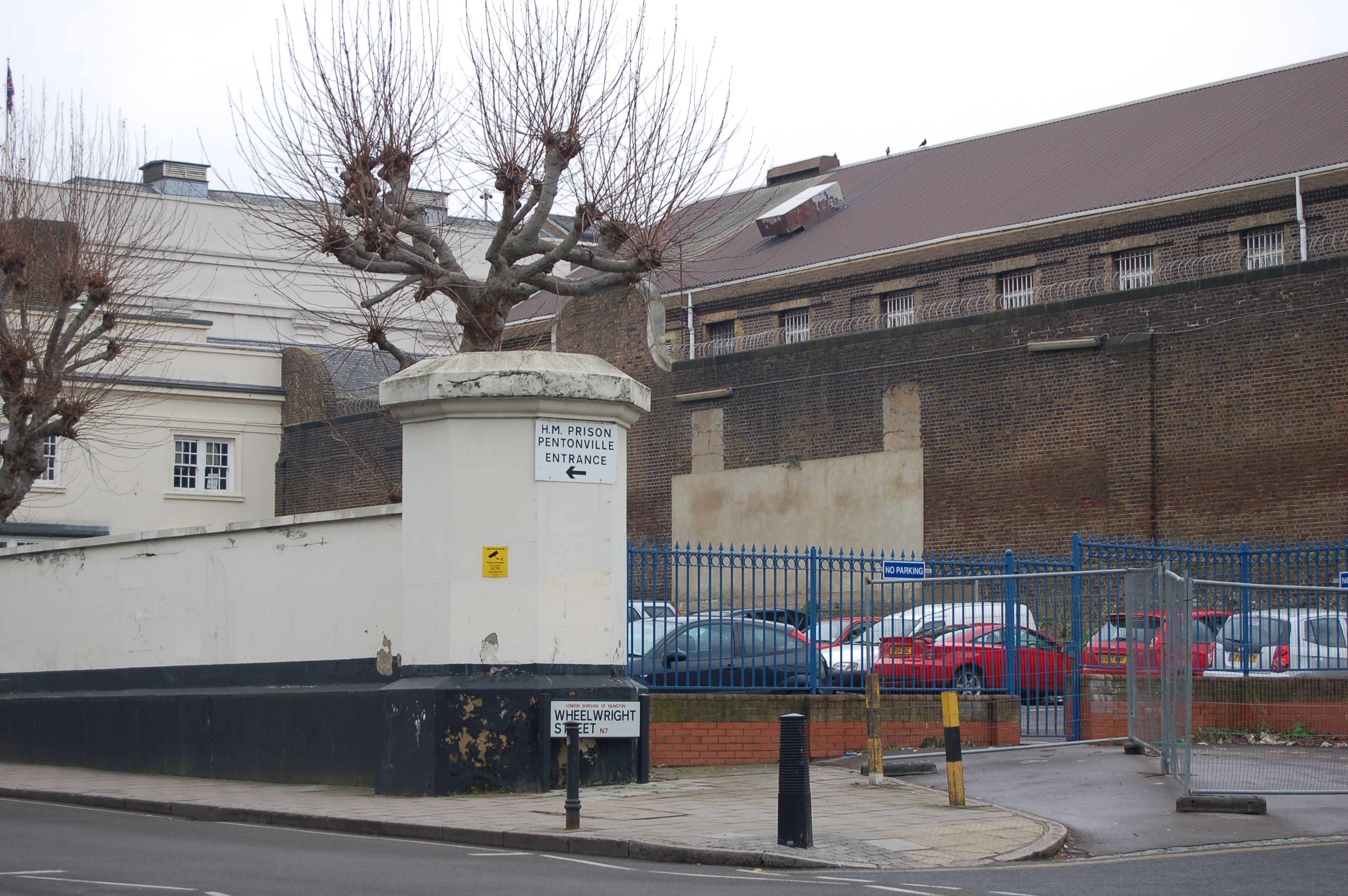
Councillors representing the Cally have renewed their calls for Pentonville Prison to be closed and its capacity to be re-provided.
Millions of BBC news viewers will have been shocked by the latest revelations of appalling conditions in Pentonville Prison. Correspondent Sima Kotecha revealed the “violence, overcrowding and self-harm … inside one of Britain’s most dangerous prisons.” When built 180 years ago, Pentonville prison stood on the outskirts of London mainly surrounded by agriculture and brickworks. Today, it’s in the heart of our high density community. What happens in the prison has a profound impact on our community.
However, the worrying state of the prison isn’t new. The prison has been condemned repeatedly in inspection reports going back over 20 years. In 2002 the Chief Inspector of Prisons commented on Pentonville that “it is not acceptable to hold prisoners in conditions which fall so far short of standards of decency and activity.”
In the past decade there has been little improvement reported. In 2015 an Inspector said the prison “had bloodstained walls, piles of rubbish and food waste, increasing levels of violence, and widespread drug-taking.” In October 2016 there was a horrifying murder of prisoner, Jamal Mahmoud, which prompted local MP, Emily Thornberry, to call for a duty-of-care investigation and for closure of the prison. Where a prison authority fails in its duty of care, an offence of corporate manslaughter may arise under section 1 of the Corporate Manslaughter and Corporate Homicide Act 2007. In the 3 weeks following that murder a further 6 stabbing incidents occurred.
A Full Inspection in 2019 condemned the prison with findings declaring “no exception to this sorry history”. During the pandemic, Pentonville was spotlighted as one of the worst regimes in the country with conditions under lockdown being described as “inhumane”. In 2021, an Inspectorate of Prisons report said that prisoners had been held in isolation for many weeks and most prisoners were locked in cells for up to 23 hours a day. The report declared that “Self-harm had increased in the months since the restricted regime had started and there had been four self-inflicted deaths since our last full inspection. Over half the prisoners in our survey said they had mental health problems and waits for primary mental health support had increased.”
Another inspection report in 2022 identified high suicide rates, illicit drug use, poor inmate opportunities and described “profound”, “chronic” and “entrenched” problems at work in the prison. It said that, only “fragile progress” had been made, with the prison “still not good enough” in all key areas of safety, respect, purposeful activity, rehabilitation and release planning. The report found some improvements to inmate safety had been made since the previous inspection. But seven inmates had died by suicide since the previous inspection in 2019.
As recently as September 2023, the prison was described as a “vermin infested hell” after the independent monitoring board (IMB) stated it was “unfit for purpose”. HM Chief Inspector of Prisons Charlie Taylor told the Guardian newspaper it should be closed. Since 2009 there have been 4 prisoner escapes. Following the last escape, Emily Thornberry MP reiterated the call for the prison’s closure.
For much of the prison’s early history, it had limited impact on the area in which it was located. However, in the past decade its presence has been more strongly felt in the neighbourhood. Drones have been used to fly-in drugs, weapons and ‘phones; gang-related affiliations of those held on remand have played-out on nearby streets; and local people have felt under threat when reporting incidents occurring inside and outside the perimeter walls.
In 2015, former Justice Secretary, Michael Gove, described Pentonville as “the most dramatic example of failure” within the prisons estate and said the prison would be replaced in a “new-for-old” programme. But instead, Gove decided to close Holloway women’s prison. This was a surprise. Compared with Pentonville, Holloway prison was relatively modern and suffered few problems. Eventually, in 2019, the Tory Government announced it was “not the stated policy of government” to close any Victorian prisons.
As local Councillors we have found a few ways to engage with the Prison Service. But our influence is limited. We recently provided some financial support for the “Liberty Choir” to take community volunteers into Pentonville prisons to sing with prisoners to improve their self-confidence, esteem and wellbeing.
Caledonian ward councillor Sara Hyde is a nationally recognised prison reform campaigner. She says: “New prison accommodation is badly needed but a replacement for Pentonville has to be located at a site accessible to prisoners’ families and near to services for rehabilitation and support. The shocking conditions within Pentonville underline the prison crisis that the new Labour Government has inherited. Years of under-investment right across the criminal justice system means Britain is housing much of its prison population in inhumane conditions. Over the past decade, sentences have become longer and many prisoners are being held beyond the time decided by courts. Increasingly there is a prison population that has acute drug dependency and adverse mental health conditions. Many experience serious violence due to real or perceived gang affiliations. These people need safety, treatment and rehabilitation.“
The prison is located in Laycock ward represented by Councillor Heather Staff who says: “Solving the prison crisis isn’t just about decrepit buildings and prisoners’ living conditions. The judicial system needs to be more humane and genuinely aiming to rehabilitate prisoners and reduce the risks of re-offending. The crisis isn’t just about prison capacity either, there are catastrophically long waits for court hearings which exacerbate the accommodation shortage because so many prisoners are held on remand for longer. On release, prisoners get very limited support not least because of the Tories’ crazy privatisation of the probation service. I recently encountered a man who had just been sitting outside the shops on Roman Way not knowing where to go or what to do. He had only the clothes he was wearing, no money and no place to stay. I got the Council’s outreach and housing teams to step-in and an otherwise destitute and homeless ex-prisoner was given help.”
 Labour Councillors representing the Cally neighbourhood in Islington